GROUP NUMBER 3 : MELANIE GOMEZ SANTIAGO DIAZ MARIA JOSE BRIÑEZ RADA
WARM UP: ¿WHO IS IT?
INTRODUCTION: DAILY ROUTINES
Daily Activities at Home
What are some of the daily activities that you do at home?
I wake up at 7am every morning.
I press the snooze button five times every morning before I turn off the alarm and get up.
I have a cup of coffee and make breakfast. I usually read the newspaper while I have breakfast. My children like to have a shower after they have breakfast but I like to have a shower before I get dressed.
My wife brushes her long hair, and I have short hair so I comb my hair. How do you do your hair in the morning?
It is important to brush your teeth, and some women like to put make-up on.
After I have finished work, I go home to cook dinner. In my house I usually make dinner. The family eat dinner together at 7:30pm.
After dinner I make sure that my children do their homework, and then I chill out on the sofa and watch television.
On television I usually watch the News. My wife usually comes to tell me to take the rubbish out, or wash the dishes.
Our children feed the dog and the cat before they go to bed and I tell them to go to the bathroom too.
If I am sick I have to take my medication, but then I get into my pyjamas and set the alarm so I wake up in the morning.
The last things I do is lock the door, turn off the lights, and go to bed.
It doesn't take me long to fall asleep.
PRACTICE: WE DID A GUIDE TALKING ABOUT DAILY ROUTINE
GROUP NUMBER 1: TATIANA MOJICA- ALEJANDRO - ANA MARIA
WARM UP: LISTEN THE SONG AND COMPLETE THE LYRICS
When I met you in the summerTo myheartbeatsoundWe fell in loveAs the leaves turned brownAnd we could be together babyAs long asskies are blueYou act so innocent nowBut youlied so soonWhen I met you in the summer
INTRODUCTION: PROFESSION AND OCCUPATION
PRACTICE: We talk with our class mates about what's our parents profession or occupation
PRODUCTION: Costumes, we did a role play, guessing the profession or occupation
REVIEW: WE IDENTIFY THE PROFESSION
GROUP NUMBER 2: PAULA MARIN- LAURA POLO- MAURICIO
WARM UP: SNAKE GAME WITH VERBS
INTRODUCTION: PARTS OF THE CITY
PRACTICE: WE DID A GUIDE AND THEM WE SOCIALIZE IT
PRODUCTION: MAGIC CARPET, STUDENT HAVE TO GUESS WHERE SOMEONE IS TRAVELL
A lesson plan is a teacher's plan for teaching a lesson. It can exist in the teacher's mind, on the back of an envelope, or on one or more beautifully formatted sheets of A4 paper. Its purpose is to outline the "programme" for a single lesson. That's why it's called a lesson plan. It helps the teacher in both planning and executing the lesson. And it helps the students, unbeknownst to them, by ensuring that they receive an actual lesson with a beginning, a middle and an end, that aims to help them learn some specific thing that they didn't know at the beginning of the lesson (or practise and make progress in that specific thing).
There is some confusion about what a TEFL lesson plan is and is not. A worksheet is not a lesson plan. A handout is not a lesson plan. A classroom game or activity is not a lesson plan. In fact, there is no need for a lesson plan to ever be seen, touched, considered or dreamed of by students, and nor does it even need to exist on paper or disk, though it usually does.
To summarize, and in very basic terms: a lesson plan is the teacher's guide for running a particular lesson, and it includes the goal (what the students are supposed to learn), how the goal will be reached (the method, procedure) and a way of measuring how well the goal was reached (test, worksheet, homework etc).
The examples below show a fairly formalized handwritten lesson plan and a back-of-the-envelope lesson plan for the same lesson -- a 45-minute lesson on the Future Continuous.
ESL Store useful ESL resources for learners and teachers, including ebooks, games and software MyEnglishClub: your own page with blogs, photos, videos, discussion, chat, audio and more
HOME PAGE
SABER INGLES
IT IS A EXCELENT PAGE FOR LEARN ENGLISH AND DO A COURSE OF ENGLISH
HAS GRAMMAR, VOCABULARY, LISTENING, READING, WRITING, PRACTICE,ETC
DRAMA ACROSS THE CURRICULUM
In their quest to introduce more kinaesthetic techniques into their classrooms, many teachers toy with the idea of using "some kind of drama". Unfortunately, many of them rarely go any further than that because they lack awareness of the various dramatic techniques available. Listed below is a brief synopsis of a number of such techniques that can be used across the curriculum. This guide is not intended to be exhaustive - and it certainly will not turn you magically into a "drama teacher". However, it may give you sufficient confidence to introduce into your teaching a number of new approaches. If these add interest to lessons, foster pupil engagement and encourage children to think, then they will have served their purpose.
IMPROVISATION
Quite simply, this is "making it up as you go along". It works best when there is some kind of simple framework (e.g. pupils are told the "beginning of the story" and take it from there). It may also be appropriate to set a few simple guidelines (e.g. "characters must not fight" may help to curb the natural tendency of exuberant young boys). Improvisation has the advantage over role play because children can "be themselves". Improvisation can be used in literacy lessons to develop storylines; in geography lessons to simulate living in different social conditions; or in history lessons to consider "how it might have been" or to generate "alternative endings" to historical scenarios.
COSTUME
While there is no need to use any costume at all, it can help remind pupils that they are "in character". There is no need to use anything complicated: a simple hat, cloak or scarf is often sufficient. You could use simple name-badges to remind children who's who.
ROLE PLAY
As in improvisation, children act out a scene - with the added factor that each is allocated a specific role or character. It is a good idea to allow children a few minutes to think about their character (or to discuss it with a friend) before the activity commences. Even so, the emphasis should be on play. Role play can be used in literacy or citizenship lessons to explore different points of view; in foreign language lessons to practice use of language; in science lessons to consider implications of using particular scientific inventions.
PROPS
Although there is no need to use props, it sometimes helps to have a few simple "bits and pieces" to hand. These can provide something for children to do with their hands. Props can also be used to indicate who the characters are (a crown for a king; a sword for a soldier; a Bible for a priest; etc.). It is often useful to have a few pieces of furniture available (a couple of chairs will do) that can form the "set".
FREEZE FRAME
also called STILL PICTURES
This is a device to be used in conjunction with improvisation or role play. Upon a given signal from the teacher (clap, bell, etc.), children "freeze" in position. This enables exploration of what characters may be thinking, which can inform the continuing action. Children could discuss how many frames are needed to tell a story, which could inform a subsequent piece of writing. If children are asked to add a single phrase to the freeze frame, this encourages them into being selective about dialogue.
PUPPETS
Using puppets often means that children are less self-conscious - because it is the puppet who speaks (not the child), thus allowing the child to act in a way that they may not usually find easy. Thus, hitherto shy children may become more assertive (or even aggressive). Such behaviours can then be discussed openly because they belong to the puppet rather than the child.
Using a puppet who is only capable of "squeaking" can be a useful "half-way house" towards encouraging a child to speak on their own behalf as they "interpret" for the puppet.
Using a "squeaking-only" puppet can also be a useful way of developing children's questioning skills. In order to find out what the puppet is "thinking", children must frame questions to which the puppetcan respond with "one squeak for yes - two squeaks for no".
Although puppets are most useful with younger children, they can also be used with older children, who could be encouraged to write or rehearse a play to be shown to younger children.
SLOW MOTION
An extension of freeze frames. Children try to encapsulate a story or incident in as few frames as possible (perhaps before, during and after a dramatic moment). This can be used to provide the structure of a subsequent piece of writing. It also slows down the incident, encouraging attention to detail and enabling more detailed analysis (especially of the feelings of the characters involved).
SOUND TRACKING
Similar to thought tracking, except that children focus on what sounds the scene may contain (including voices). At a given signal from the teacher, children make their noise, which can then be discussed in more detail. This is a useful preparation for creative writing.
PAIRED CONVERSATION
This is a conversational rather than a dramatic device. Children work in pairs, seated and without props, to hold a conversation. Children can be allocated roles or speak from opposing viewpoints. The activity can be useful in preparing ideas to be used in persuasive writing tasks.
A magic carpet can be a useful device to indicate to a class or group that they are being transported (in their imagination) to somewhere special. It is especially useful in geography lessons, but could equally transport children "through time" in history lessons. You may wish to use an actual carpet or similar piece of heavy material.
THOUGHT TRACKING
This can be used in conjunction with freeze frame and focuses specifically on what the characters in the frame are feeling and thinking.
MIRRORING
A simple activity to encourage observation, concentration and physical expression. Working in pairs, face to face, one child takes the lead (by agreement) and performs a series of simple movements which their partner replicates - as if in a mirror. Alternatively, the whole class mirrors the movements of the teacher. The teacher starts with a simple sequence of movements which is then repeated - with additional movements added. Gradually a lengthy sequence can be built up, thus helping to develop children's memory skills. (The Body-pegs memory technique relies on just such an activity.)
MIMING
Simple mime games can serve several purposes. They can help children focus on how we show our emotions - which can lead to more descriptive writing. They can help children recognise similarities in patterns of movement - thus developing their use of simile and metaphor. They can also help children to develop simple physical mnemonics that can aid retention of information - and also facilitate understanding (see the BrainBites activity entitled Hand Sculpture).
HOT SEATING
One child takes the role of a character from a story (or an historical figure, or the inhabitant of a foreign country, etc.) and sits in the hot seatto face questions from the rest of the group. It may be appropriate to allow the hot-seater to prepare in advance - or the teacher may take on that role. If the person in the hot seat is a "baddy", it is a good idea for them to wear a simple piece of costume - to indicate that they are answering in role.
MODELLING
Working in small groups, one member of the group (the "sculptor") arranges the other members to form a tableau. This may be freeform or with a specific objective in mind (perhaps suggested by the teacher). This can then lead to discussion of the role of each tableau member - and thence on to thought tracking, etc.
Alternatively, the teacher may manipulate a number of children into a tableau, which the rest of the class discusses (or guesses), making suggestions for appropriate alterations etc.
ROLE ON THE WALL
Although not strictly a dramatic technique, this activity can be used as a follow-up from role play or thought tracking. A large outline drawing of a character is pinned on the wall (if you are "artistically challenged" you could draw around a child). Children write words around the outline to show how the character is perceived by others. Children also write words inside the outline to show the character's inner feelings. This can lead to useful discussion of real and fictitious characters.
CONSCIENCE ALLEY
Children stand facing each other in two lines that form an alley. As the character walks between the lines, each child that they pass speaks to their conscience - providing arguments for and against a possible course of action. It is not essential for every child to say something - and some children may wish to repeat a previous contribution.
If there are several options for the main character to consider, the activity could be adapted into a "conscience triangle" or a "conscience square".
PERFORMANCE
Although it is not necessary for every piece of "dramatic" work to result in a performance, the opportunity to present work to an audience does show that the work has been valued and helps to develop children's confidence. Whereas a proper performance may require more rehearsal time than you are prepared to allocate, a compromise solution is for children to present a makeshift performance in a "good work assembly" or similar occasion. Although this may require polishing up, children are usually more than happy to do this during lunchtime or a "wet playtime".
I am indebted to Paula Marris for her assistance in compiling this list of dramatic techniques. Paula is an independent drama teacher who is particularly skilled at using drama to develop a range of skills and competences. She has initiated a number of innovative drama projects, details of which can be found on herwebsite.
LearnEnglish is brought to you by the British Council, the world's English teaching experts. If you want to learn English, you've come to the right place! We have hundreds of high-quality resources to help improve your English. Read about how to use the site, take our level test or find a face-to-face or online course in your country.
Grammar & Vocabulary
In Grammar and Vocabulary you can learn and practise grammar and vocabulary through explanations, activities and games.
You'll find a detailed grammar by well-known author Dave Willis, a quick reference containing 48 common areas of grammar and games to help you practise your vocabulary.
Fun & Games
In Fun and Games you can play games of all types and listen to jokes to help you practise your English and also have lots of fun!
You can find games for all tastes... games to help you practise your English and others just for fun. Play, enjoy and learn! You can also read illustrated jokes, all involving puns or other ways to play with words. Listen, laugh and learn!
Business & Work
In Business and Work you can find materials aimed at helping you reach your professional aspirations by developing your English skills.
You can find podcasts and articles on a range of business and professional topics, all accompanied by language practice activities to help you to improve your workplace English. You can also find a video series that covers the process of recruiting.
Writing
Whether you have to write essays for your studies or emails for your work, we can show you how to do it!
Apps
You can now get LearnEnglish apps on your mobile phone and tablet!
Download our Android, iPhone, iPad and Windows Phone apps to help you learn English.
COURSES
Learn English with the British Council and you'll be learning with the world's English experts. Join a community of English learners in your country today and reach your full potential.
General English courses
Being confident with your English can enhance your life in so many ways. We offer a range of courses, so whether you’re a beginner or want to top up your English skills and become an expert, we’ve got the right course for you.
University Students
Invest in your future and succeed with our world of English expertise for students. The British Council is an internationally renowned organisation that you can trust.
Business communication
Develop key business communication skills and take your career to the next level. Our reputation for quality and professionalism is recognised globally.
IELTS preparation courses
As co-creators of the IELTS exam, we are uniquely placed to help you get the score that you need through our range of IELTS preparation courses.
Duolingo is a website and social project aimed at free language learning and certification of the level of English. The site offers courses in English, French, German, Portuguese, Italian, Catalan, Esperanto and Jopara for Spanish-speaking users as well as Dutch, Danish, Swedish, Norwegian, Turkish, Esperanto, Russian, Hebrew, New courses are being created thanks to "The language incubator". In addition to its desktop web version, it has an application for iOS, Android, Windows Phone and Chrome.
The main didactic feature is practicality, it is not necessary to read grammar texts to complete the course in any language, one can understand the meaning of the largest number of sentences in the course intuitively, only with the images, the tab Translation and errors that the program corrects you. The prayers that are complicated for someone are answered by the community, thus facilitating learning through doubt. No word is learned without being heard. Duolingo follows the computational model 1 to 1, that is to say, that the machine constantly teaches the student and is adapted to this, a method that is perfected day by day with the data collected by the learning of each user who has already taken the course. The progress in each unit is visualized by means of "full memory" graphs that indicate the degree of mastery of the different lessons. It is possible to compare one's progress with that of other participants, by means of an invitation to follow or to be followed. Discipline and perseverance are critical to achieving further progress, and it takes 30-60 minutes of practice per day to gain a mastery in a relatively short time. Of course Romance languages will be learned faster for Spanish speakers on the platform. Duolingo alone is not enough to develop verbal communication skills in another language. To improve the users, they recommend using Memrise, reading children's books with Audiolibro and watching films subtitled in Closed Caption. It is also important to have backup material, physical or electronic manuals, as well as bilingual dictionaries such as wordreference. Age is not a limitation, but it can be the mastery of the grammar rules of the mother tongue. In duolingo in addition to acquiring notions about a foreign language the user can improve spelling and other small mistakes in their mother tongue.
Vitutor is a platform of teletraining designed for online learning of different subjects. The project began with the specialization in Mathematics contents of diverse courses with a great variety of interactive exercises, but it has extended its offer to other subjects like English.
HOW CAN I STUDY MORE EFFECTIVELY?
TAKING NOTES All good study techniques Start with good note taking
Habits. Knowing how to take good notes will improve your ability to
study more effectively.
The
Three Stages of Good
Note taking
1. Get ready to take notes (before class)
–Review your notes from previous
lessons
–Complete all assignments and
readings before class
–Bring all needed materials to
take notes
2. Taking notes (during class)
–Keep your focus on the teacher
–Listen for signal statements
like:
•Most importantly
•Remember that…
•Be sure to include….
–Write quickly
•Use abbreviation
•Place a “?” by things you are not
sure about
3. Rewrite your notes
–After class rewrite your notes
•Change abbreviations to complete
words
•Change symbols into words
•Change shorter sentences to more
complete sentences
–Answer any “?” you had in your
notes
10 STUDY HABITS OF SUCCESSFUL STUDENTS
•Try not to do too much studying
at one time
•Plan specific times for studying
•Try to study at the same times
each day
•Set specific goals for your study
time
•Start studying when planned
•Work on the assignments or
materials that are the most difficult first
•Review notes before beginning an
assignment
•Eliminate distractions during
study time
•Call another student for
assistance when needed
•Review schoolwork over the
weekends
PREPARING AN EFFECTIVE PLACE TO STUDY
The
“Study Place” should always be available to you
•The
“Study Place” should be free from
interruptions
•The
“Study Place” should be free from
distractions
•The
“Study Place” should have all of the
materials on hand that are needed to study
•The
“Study Place” should have a large enough desk or table
•The
“Study Place” should have a large
storage area available
•The
“Study Place” should have a comfortable
chair
•The
“Study Place” should have enough light
•The
“Study Place” should be kept at a
comfortable temperature
USING ACRONYMIC SENTENCES
Creating an Acronymic Sentence
–Write each piece of information
that needs to be learn in order
–Underline the first letter of
each word
–Write a sentence using the words
that begin with the underlined letters
USING PEGWORDS
.Think of the fist piece of
information to be remembered
•Think of a pegword
for the number one (the pegword
should
rhyme with one)
•Create a picture in your mind to
associate with that pegword
•Repeat points 1-3 with each piece
of information you are to remember
Number Word
Pegword
One
Run
Two
Shoe
Three
Tree
Four
Door
Five
Dive
Six
Fix
Seven
Heaven
Eight
Gate
Nine
Sign
Ten
Hen
USING FLASHCARDS
Flashcards are a very useful tool
in learning or remembering information such
as: Vocabulary Words and
Meanings, Math Formulas, History Facts, and Correct
Spellings or Words.
•Make Flashcards as you learn to
study
–Carry blank cards with you
–Organize your cards in decks by
topic or subject
•Use both sides of a Card when
appropriate
–Write words on one side and
definitions on the other side
–Flip the cards and learn the
information both ways
•Use flashcards in several
different colors
–Different colors can cue your
answers
•Illustrate the cards
–Draw or cut pictures to place on
cards
–The more interesting looking the
cards, the less bored one becomes using them
USING THE LOCI METHOD
•Imagine yourself walking through
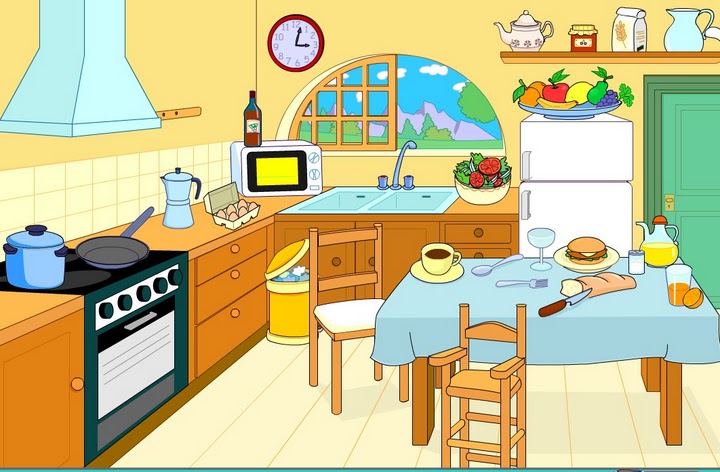
a very familiar location or area (Your Kitchen)
•Associate specific locations and
activities with the items you want to remember
The Loci Method is difficult for some people are
not Kinesthetic Learners. See if you can apply the Kinesthetic Learning Method
to remembering these famous inventors: Thomas Edison Alexander G. Bell George W. Carver Benjamin Franklin
USING THE ASPIRE SYSTEM
•A
– Approach/Attitude/Arrange
–Approach your studies with a
positive attitude
–Arrange your schedule to
eliminate distractions
•S
– Select/Survey/Study
–Select a reasonable chunk of
material to study
–Survey the headings, graphics,
pre and post- questions
–Study marking any information you
do not understand
•P
– Put aside/Piece together
–Put aside your books and notes
–Piece together what you have
study and try to summarize that information yourself
•I
– Inspect/Investigate/Inquire
–Inspect what you did not
understand
–Investigate all available sources
of information (textbooks, online, dictionary…)
–Inquire from support
professionals (Librarians, tutors, teachers, …)
•R
– Reconsider/reflect/Relay
–Reconsider the content; what
questions would you ask the author
–Reflect on the material; how can
I apply this material
–Relay understanding; how would I
make this information more interesting or easier to understand to other
students
•E
– Evaluate/Examine/Explore
–Evaluate your grades on tests and
assignments and look for patterns or weaknesses
–Examine you progress on improving
weak areas
–Explore options for you with
teachers, tutors, other students
USING STUDY GROUP
Study Groups can be very
beneficial in some situations.
There are Several things to
consider when thinking about
using Study Groups:
1.Benefits
of a Study Group
2.Starting
a Study Group
3.Characteristics
of a Good Study Group
4.Pitfalls
of Study Groups
BENEFITS OF A STUDY GROUP
•A support group can be a
motivator
•Easier to ask classmates
questions
•Your commitment might be stronger
because the group depends on all members
•Study groups add a strong
auditory aspect to your learning experience
•One or more group member is
likely to understand something that you do not
•You can learn new study
techniques or habit from other members
•You can compare your notes with
other students
•Teaching or explaining concepts
to other group members will reinforce your learning
•Face it! Studying can be boring.
Study with others can make the studying more enjoyable
CHARACTERISTICS OF A SUCCESSFUL STUDY GROUP
•Each group member contributes
•Group members actively listen
without interrupting each other
•Group members work together to
resolve any problems arising without the group
•Members are prompt and come ready
to work
•The group stay on task according
to the agenda
•Members always show each other
respect
•Members should feel comfortable
with constructive
criticisms
•Members should feel free to ask
questions
•At the end of each meeting, an
agenda is set with assignments for the next meeting
•Above all, a positive attitude
that “we can do this together” is maintained.
POSSIBLE PITFALLS OF A STUDY GROUP
•Do
not let the Study Group get distraction from the agenda











/about/memrise-logo-579bd4db5f9b589aa9789d2a.png)


